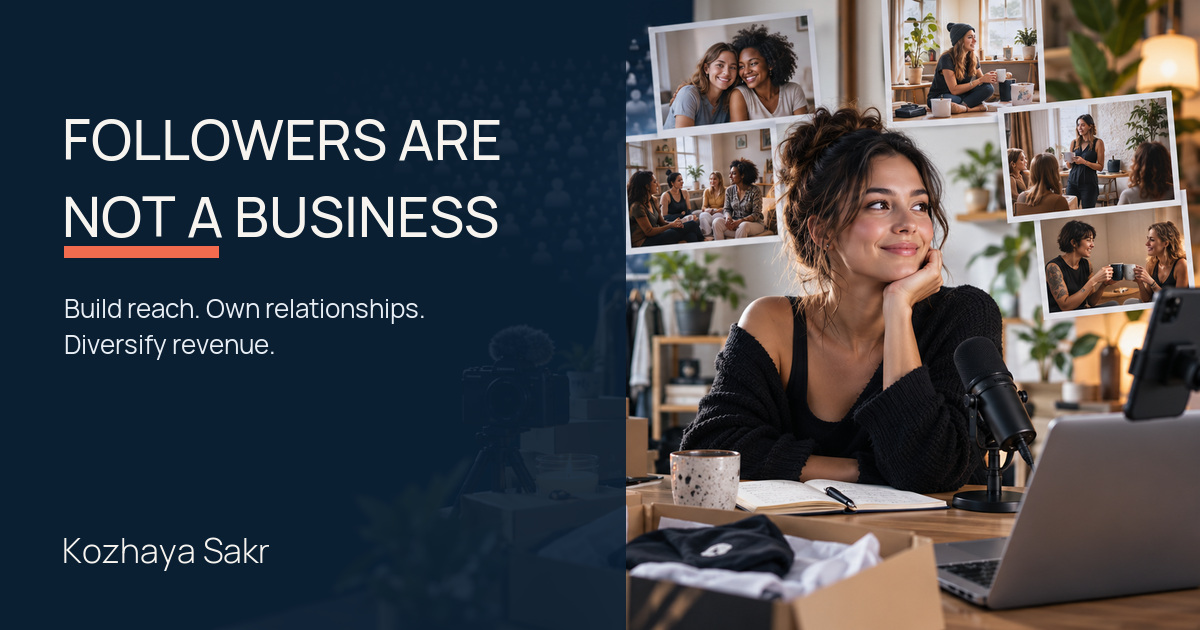
A large audience can disappear from view after one algorithm change. A creator can receive millions of views and still lack predictable income, direct customer relationships or control over how their work is reused.
That tension moved to the foreground at IFA Berlin on September 6, 2026. Its Creator Stage brought creators, platforms and business specialists together to discuss sustainable careers, contracts, monetization and platform diversification.
The strongest practical conclusion is simple: followers can create opportunity, but followers alone do not constitute a business.
What happened at IFA 2026
IFA’s creator-economy update describes a programme focused on AI-assisted workflows, emerging social formats, production technology and sustainable creator business models.
During “The Creator Economy: A Survival Guide,” speakers argued that long-term careers require more than reach and follower numbers. IFA’s account highlights stable and diversified revenue, direct community relationships, channels and content under the creator’s control, clear processes, and a strategic approach to partnerships, rights and exclusivity.
The official session listing confirms that contracts, monetization and platform diversification were central topics.
Another IFA discussion examined trust in an environment filled with AI-generated content. Participants argued that relatable daily experience can be more persuasive than unattainable lifestyle imagery. They also distinguished an audience, which often receives one-way communication, from a community in which people interact with each other.
Why follower counts can mislead
A follower count measures an accumulated platform action. It does not tell a creator how many people will see the next post, trust a recommendation, join an event or buy a product.
Distribution remains controlled largely by the platform. Ranking systems change. Formats rise and fall. Accounts can be restricted, compromised or suspended. A creator may also discover that a large global audience is commercially less useful than a smaller community with a clear shared interest.
Brands face the same measurement problem. Paying for visible reach without examining audience relevance, content quality and business outcomes can make a campaign appear successful while producing little effect.
From an audience to a community
An audience watches. A community participates.
That distinction changes how creators plan content. Instead of asking only how to maximize views, they can ask what brings people back, what encourages useful conversation and what makes the relationship valuable even when no promotion is running.
The goal is not to move everyone away from social media. Platforms remain powerful for discovery and distribution. The goal is to establish at least one direct, permission-based relationship that is less dependent on a single feed.
Email subscribers, registered members and event attendees are examples. These relationships still require consent, privacy safeguards and a genuine reason for people to remain connected.
Diversifying revenue without losing trust
Creator income can come from brand partnerships, advertising shares, subscriptions, products, services, licensing, affiliate sales, consulting, courses and events. Diversification can reduce the damage caused when one source declines.
It can also create distraction. Launching five offers before understanding the audience rarely produces a stable business.
A better approach is sequential. First identify the creator’s strongest form of value: entertainment, expertise, access, curation, community or a useful product. Then test one additional revenue stream that fits the relationship.
A business educator might add a workshop. A trusted product reviewer might use carefully disclosed affiliate links. A specialist creator could offer a paid membership or limited consulting service. The model should extend the value of the content rather than undermine it.
Trust is the constraint. When every post becomes a promotion, the audience has less reason to believe any recommendation.
What current creator research adds
Epidemic Sound’s Future of the Creator Economy Report 2026 surveyed 3,000 adult creators in the UK and US during March and April 2026.
The company reports that 72% were building owned audiences through channels such as newsletters and Discord. It also found that 41% wanted to create a sustainable independent business, media brand or creator studio.
The same research says 94% already use AI in their work, but 93% associate the technology with significant risks and 73% believe unclear licensing could limit future opportunities. Because Epidemic Sound sells creator tools and licensing services, its findings should be read as company-commissioned research rather than neutral market truth.
Even with that limitation, the data supports an important operational point: production speed and audience size do not eliminate the need for originality, rights management and direct relationships.
Contracts matter before content goes live
Creators sometimes focus on the fee and overlook the rights being transferred.
A brand agreement should define the deliverables, deadlines, review process, payment schedule, disclosure requirements and cancellation terms. It should also state where the content can appear, for how long, whether the brand may edit it, whether it can be used in paid advertising and whether exclusivity prevents work with competitors.
AI introduces further questions. Can either party use the creator’s image, voice or content to train or operate automated systems? Can synthetic variations be produced? Who approves them? What happens after the contract ends?
Brands also benefit from clarity. Written permissions reduce disputes and help marketing, legal and media teams understand what they can legitimately reuse.
A practical 90-day plan
Creators can begin without rebuilding their entire operation.
During the first month, audit the audience. Identify which formats generate saves, replies, return viewers, direct inquiries and meaningful discussion—not only impressions.
During the second month, create one direct channel. Offer a useful newsletter, resource, event invitation or community experience. Explain what subscribers will receive and protect their information.
During the third month, test one revenue extension. Define the audience need, price, delivery cost and success measure before launch.
Track a small set of business indicators:
- Returning audience rate
- Email or member growth
- Revenue concentration by source
- Conversion from content to inquiry or sale
- Community participation and retention
- Brand-partnership renewal rate
- Percentage of content and customer data that remains exportable
Brands should conduct a parallel review. Evaluate creators through audience fit, credibility, content quality, rights, safety and measurable outcomes. A smaller creator with genuine trust may provide more value than a larger account with weak relevance.
Build relationships that survive the feed
The creator economy is becoming more professional, but professionalism should not mean making content less human. It means building processes around the value and trust that attracted people in the first place.
Social platforms can provide extraordinary reach. They cannot guarantee continued distribution, income or ownership of the audience relationship.
From the Kozhaya Sakr Digital perspective, the strongest creator strategy combines platform reach with direct community, protected intellectual property, diversified revenue and clear measurement. Technology and marketing should turn attention into durable value—not make a business dependent on the next algorithmic recommendation.